

YAD
Young ADult Caring Corner
YAD: The Young ADult Caring Corner at Sharsheret is here to support you as you support your loved one.
אתה לא לבד.
The Young ADult Caring Corner at Sharsheret is here to support you as you support your loved one.
It’s scary when someone you love is diagnosed with cancer. You might wonder how you can support them, and you might feel selfish for wanting to also take care of yourself; for wanting to continue to do the things you like to do: seeing your friends, doing your hobbies, going to school and work.
We’re here to help you understand your loved one’s diagnosis, how you can help (even from afar), and how you can take care of yourself while still caring for them.

Caring for Loved Ones
You want to help, but you’re not sure exactly how. Here are some specific ideas that will make a difference.

Self Care
Taking care of yourself while also caring for someone with cancer is difficult. We’ll help you navigate this complex experience.
Cancer Genetics
Your relative’s cancer diagnosis may have implications for your own health. Here’s what to do next.

Types of Cancer
Our community is more at risk for certain types of cancer. Learn more about each one here.
משאבים נוספים
This program has been dedicated by Joy and Michael Goldsmith and Family.
Caring for Loved Ones
Although you obviously know your loved one better than we do, there are some universal truths that anyone who has been through cancer treatment will agree with:
It’s important to offer to help with specific tasks rather than offering “to help.” Think of specific ways you might be able to be helpful and offer them proactively. Instead of asking, “Do you need anything?” ask:
- What can I pick up for you at the grocery store?
- Can I do your laundry?
- Can I mow your lawn or shovel your driveway?
- What are things I can do to help at home?
- Can I walk your dog or water your plants?
Many people want to spend as much time with their loved ones as possible after they receive a diagnosis, and they often feel lonely. Spend quality time with them if they’re up for it. Help them take their mind off the cancer.
- Watch a movie or show together – something they like, even if it’s something you wouldn’t normally watch
- Play a card game or board game together, or work a puzzle together
- Go for a walk or a drive if your loved one feels up for it
Help around the house. Most folks going through treatment are exhausted, and even if they’re not going through treatment, they’re often stressed out and depressed. Housework is the last thing on their minds, but it still needs to get done.
- Good in the kitchen? Help make dinner (and if you make extra you can freeze some for days when there might not be a chance to cook)
- Offer to bring them their food and drink so they don’t have to get up
- Help do the dishes or the laundry
- If you have younger siblings, offer to keep them occupied or give/arrange for them rides to and from school or activities
- Communicate: It’s okay to ask questions, even if they are difficult ones.
- Go to appointments with your loved one so that you can meet their health care team and get information.
- It’s hard to remember all your questions when you finally reach the doctor’s office, especially if you’re the person getting treatment – doctors offices stress people out. To offset that stress, create your own list of questions ahead of time so you don’t forget to get the answers you and your loved one need.
- Take notes during the appointment so you can refer to them later. Note things like which medications they are taking, what doses, expected side effects, warning signs, etc.
- Make sure the medical team has all of your contact information in case of an emergency. Talk to your school about your phone, and how important it is that you have it with you and turned on at all times so that you can be reached.
- Keep a list of important contacts: doctor, nurse, social worker, pharmacist, ER, etc.
- Help create a list with your loved one of people who can help with certain tasks, like walking the dog, picking up groceries and prescriptions, and driving to appointments.
- Get help. It’s well known that being a caretaker to a relative is incredibly taxing, and that’s especially true if you’re young. There are support groups, assistance networks, and online resources to help you – search for them and take advantage of them.
- Regular communication is important:
- Call or Facetime often to check in regularly.
- Consider setting up a schedule of when you will call each week.
- Don’t expect to be entertained when you call – your loved one will be tired and stressed out, so be prepared to tell them what’s happening in your life so the conversation isn’t only about cancer.
- Help manage care
- Speak with family or friends who live near your loved one and get a network of people who can help with meals and rides to appointments.
- Consider setting up a meal train where friends and family can sign up to bring meals.
- Be involved in appointments
- If possible, use a tool like Facetime, Zoom, WhatsApp, or Facebook Messenger to join important appointments.
- If you can’t join by video, ask for important appointments to be recorded so you can listen afterward and stay in the loop.
- Do your research
- Become knowledgeable on the types of treatment your loved one is having and how to cope with or manage those side effects.
- Self-care
- Even if you are caring from a distance, it is still important to take a break and care for yourself during this tough time
Self Care
We’re sure you’ve heard it before, but we’ll say it again: self care is really important, especially when you are caring for a parent or loved one who is sick.
It might be hard to find time to do things for yourself with your busy schedule, but there are ways you can incorporate self care into your daily routine to make this difficult time a bit easier:
- Drink enough water each day
- Choose healthy foods, including fresh fruit, whole grains, and lean proteins
- Get enough sleep
- Go for a walk or run outside
- Take a gym or virtual exercise class
- Make time for mindfulness, meditation, yoga, or anything else that helps you relax and unwind
- Reach out to a trusted friend, family member, teacher, colleague, clergy member or counselor if you’re struggling with anxiety, depression, or feel overwhelmed
- Find a support group
- Join the Sharsheret Buddy System for one on one support
- Don’t be shy…say “YES!” when someone offers to help, and then tell them what you need.
- Let your teachers, bosses, and coworkers know what is going on in your life so they can help out. They may be able to reduce your load, or at least cut you some slack given the situation.
- Talk to your school counselor. They may have resources you can take advantage of, and may be able to work with your teachers to lighten your load during this difficult time.
- Keep a list of what needs to be done
- Prioritize the most important things on your list
Cancer Genetics
- About 5-10% of cancer diagnoses are hereditary.
- Mutations in BRCA1 and BRCA2 are 10x more common in Ashkenazi Jews (affecting 1 in 40 people as opposed to 1 in more than 400) , although they can occur in all populations.
- If genetic testing has identified a mutation in a relative, you should discuss being tested for the same mutation.
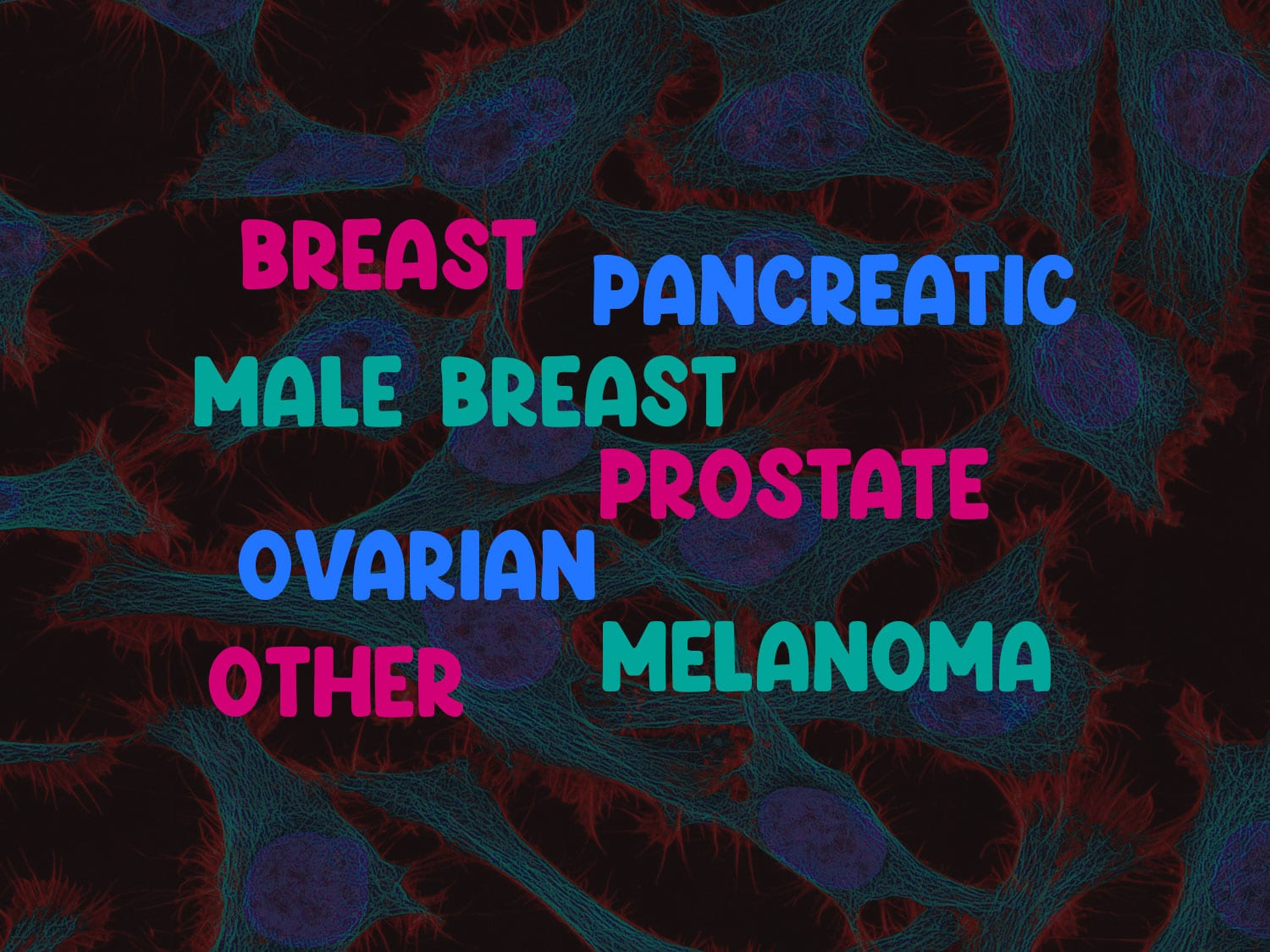
- Mutations in BRCA1 and BRCA2 can be inherited from either parent and can lead to diagnoses of many types of cancer (including breast, ovarian, male breast, melanoma, pancreatic, and prostate), so it is important for families to be open about their medical history.
Regardless of your results, it’s important to understand what your risk may be. To find out more, you can speak to our genetic counselor אוֹ click here to read more.
Types of Cancer
While each cancer is different and each person’s experience will vary, the information below will help you know what to expect.
- Breast cancer occurs when breast cells multiply more than they should. This uncontrolled growth leads to the formation of a tumor.
- There are many different types of breast cancer and many different ways to treat it. Some individuals might have surgery and then treatment (such as chemotherapy or radiation). Others might have treatment first, and then determine if/what type of surgery is necessary.
- When talking about breast cancer, you might hear about different “stages” and “grades.” Learn more about stages and grade.
- Although breast cancer is very rate in men, it can occur, and is often linked to a genetic mutation like BRCA.
- If your parent or relative has been diagnosed with breast cancer, click here to schedule a call with our genetic counselor and learn more about what this could mean for you.
- Learn more about breast cancer from www.breastcancer.org
- Ovarian cancer occurs when cells in the ovaries multiply more than they should. This uncontrolled growth leads to the formation of a tumor.
- There are many different types and stages of ovarian cancer.
- Based on the type and stage, there are different ways to treat ovarian cancer including surgery, chemotherapy, and sometimes radiation.
- If your parent or relative has been diagnosed with ovarian cancer, click here to schedule a call with our genetic counselor and learn more about what this could mean for you.
- Learn more about ovarian cancer at ovarian.org.
- There are other cancers that are related to breast cancer and ovarian cancer. For example, someone who has a mutations in the BRCA1 or BRCA2 gene may have an increased risk for breast cancer, ovarian cancer, and other cancers including pancreatic cancer or melanoma.
- Additionally, men with mutations in the BRCA1 or BRCA2 gene and men have an increased risk for prostate and breast cancer.
- A family history of any of these cancers is a reason to consider genetic testing.
- Learn more about these other cancers:
There are many different types of cancers. Learn more about other cancers.
Talk to a Buddy
Having a family member who is diagnosed with cancer can be difficult, and no one should have to go through it alone. That’s why we created the Buddy System.
The Buddy System pairs young adults like you with someone who has also experienced a loved one’s diagnosis with breast cancer or ovarian cancer.
The Buddy System can connect you with another young adult who can be an extra source of support for you as someone who really gets it.
If you’re interested in being connected with a Buddy or signing up to become a Buddy to provide support to others, please click here.
משאבים נוספים
Books and Stories:
For more information on cancer:
Our Voices
Find inspiration, hope, support, and critical information in these stories featuring the young adults in our chain – the faces of Sharsheret. Get more support by connecting with a YAD Buddy, someone who shares a similar story to yours and can be there to support you as your loved one goes through breast or ovarian cancer.
YAD in the News